

POWERING QUALICHECK AI
ACES™
Air Cargo Excellence System
The Operational Assurance Methodology for Air Cargo
ACES™ is Logic Services' proprietary operational assurance framework, developed specifically for air cargo to support structured, risk-based decision-making and continual improvement.
It provides the methodology behind QualiCheck AI, connecting operational evidence with risk assessment, Root Cause Analysis, corrective action and effectiveness verification.
Assess • Control • Assure • Improve

From Compliance to Operational Assurance
Air cargo organisations operate within multiple regulatory, quality, safety and customer requirements.
Compliance establishes what must be achieved.
Operational assurance goes further by asking:
What is happening in the operation?
Where is the risk?
Are critical controls working?
Why did a deviation occur?
What action is required?
Was that action effective?
ACES™ provides a structured methodology for answering those questions consistently.
Compliance defines requirements. Operational assurance verifies how effectively they are controlled in practice.
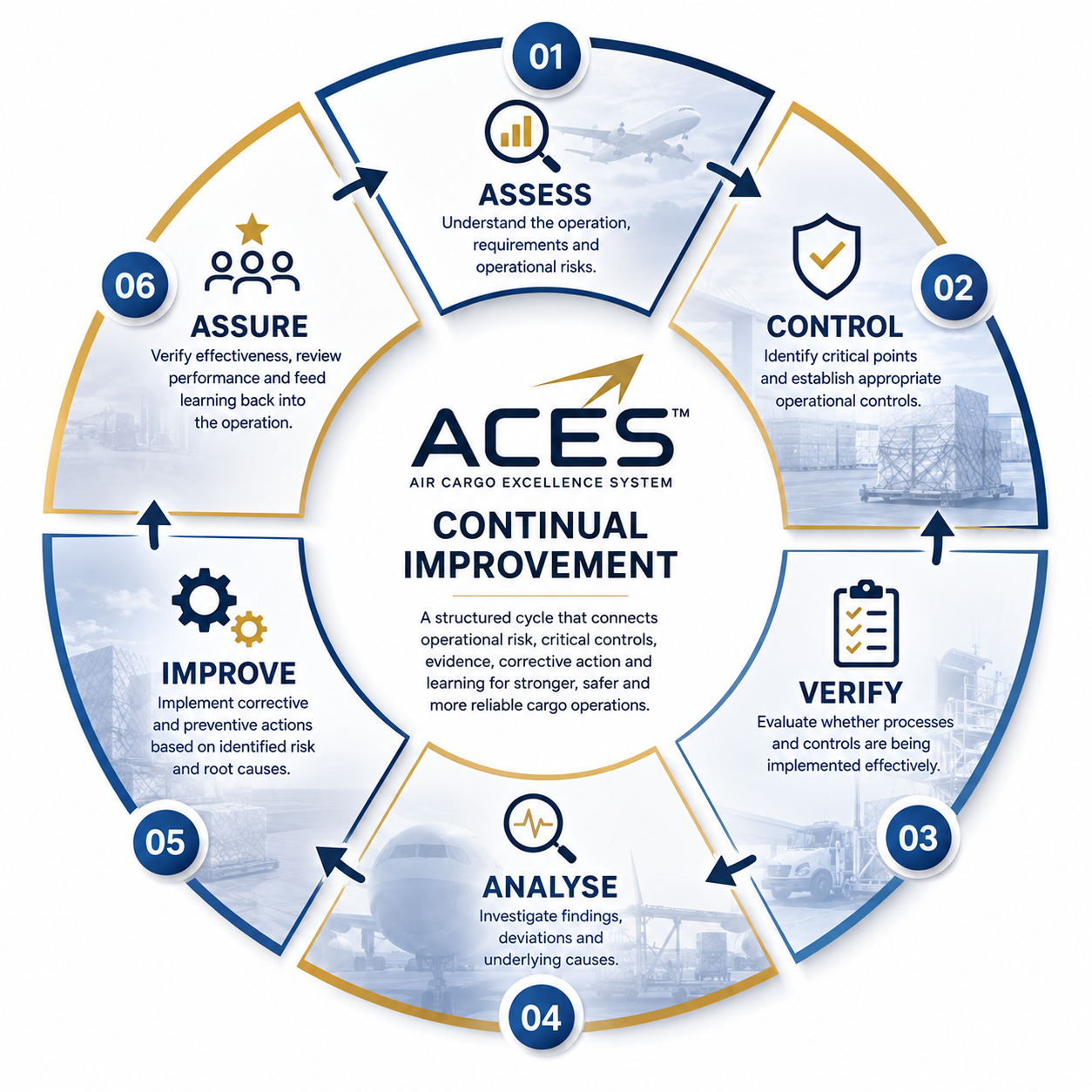
The ACES™ Operational Assurance Cycle
A Structured Approach to Continual Improvement
01 — ASSESS
Understand the operation, requirements and operational risks.
02 — CONTROL
Identify critical points and establish appropriate operational controls.
03 — VERIFY
Evaluate whether processes and controls are being implemented effectively.
04 — ANALYSE
Investigate findings, deviations and underlying causes.
05 — IMPROVE
Implement corrective and preventive actions based on identified risk.
06 — ASSURE
Verify effectiveness, review performance and feed learning back into the operation.
ASSESS → CONTROL → VERIFY → ANALYSE → IMPROVE → ASSURE ↻
Continual Improvement
One Framework. Multiple Operational Assurance Disciplines.
ACES™ (Air Cargo Excellence System) est la méthodologie d'assurance opérationnelle propriétaire de Logic Services, développée spécifiquement pour le fret aérien afin de soutenir une prise de décision structurée, basée sur les risques, et l'amélioration continue.
Operational Risk
Identify and assess risks that can affect operational performance, cargo integrity or compliance.
Critical Control Points
Identify operational points where control is essential to prevent or reduce significant risk.
Operational Assessments
Evaluate processes, capabilities and operational conditions using structured criteria.
Audits & Inspections
Verify implementation and identify deviations requiring attention.
Non-Conformities
Structure findings according to their significance and required response.
Root Cause Analysis
Investigate why operational failures or deviations occurred.
CAPA
Define corrective and preventive actions addressing identified causes and risks.
Effectiveness Verification
Determine whether implemented actions achieved their intended result.
Management Review & Improvement
Turn operational findings into management insight and continual improvement.

Built Specifically for Air Cargo
Operational Assurance Around the Cargo Journey
This is where ACES differentiates itself from a generic QMS methodology.
ACES™ has been developed around the operational realities of air cargo and the points at which operational control matters throughout the cargo journey.
A visual cargo journey would work extremely well here:
ACCEPTANCE → STORAGE → BUILD-UP → RAMP TRANSFER → AIRCRAFT → TRANSIT → BREAKDOWN → DELIVERY
Operational Risk • Critical Controls • Evidence • Deviations • Corrective Action
ACES™ can be applied across cargo handling, warehousing, ramp operations, temperature-controlled logistics and other operational environments where structured control and evidence-based assurance are required.
Designed around operations — not simply documentation.

Supporting Recognised Frameworks
Designed to Complement — Not Replace
ACES™ is designed to complement recognised regulatory, quality and cold-chain frameworks by providing a practical operational assurance methodology for implementing, monitoring and improving operational controls.
Depending on the organisation and activity, ACES™ may support environments incorporating:
IATA CEIV Programmes
Operational assurance supporting structured implementation and readiness.
GDP Principles
Risk-based control and evidence supporting temperature-sensitive healthcare logistics.
HACCP Principles
Critical-control thinking and preventive operational risk management.
ISO Management Systems
Operational evidence, corrective action, effectiveness verification and continual improvement.
ACES™ does not replace applicable regulations, certification programmes or recognised management systems. It provides an operational assurance methodology that can help organisations translate requirements into controlled operational practice.

The ACES™ Framework
A Structured Body of Operational Assurance Knowledge
ACES™ is organised as a structured framework covering the foundations, operational controls, assurance processes, implementation and integration required to support effective air cargo operations.
The framework is organised across six interconnected areas:
I — Foundation
Principles, governance, terminology and the foundations of operational assurance.
II — Operational
Operational controls and Critical Control Points across the cargo journey.
III — Operational Assurance
Monitoring, assessments, audits, risk, non-conformity, CAPA and management review.
IV — Certification Standards
Structured requirements supporting future ACES™ assessment and certification models.
V — Implementation
Practical guidance for planning, deploying, verifying and continually improving ACES™.
VI — Integrated Compliance Guides
Guidance supporting alignment with recognised quality, cold-chain and compliance frameworks.
One framework. From operational control to continual improvement.
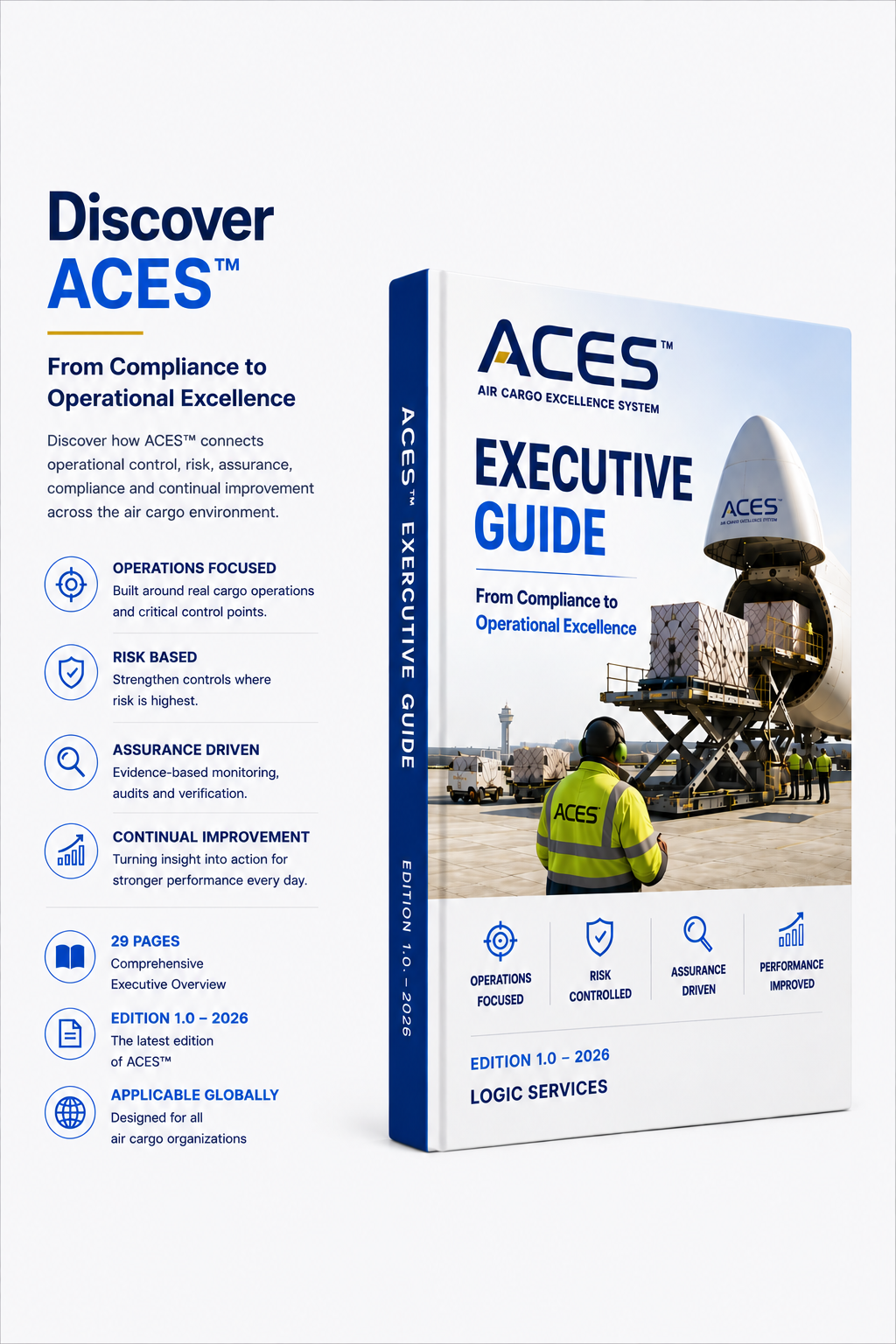
Discover ACES™
From Compliance to Operational Excellence
Discover how ACES™ connects operational control, risk, assurance, compliance and continual improvement across the air cargo environment.
ACES™ Executive Guide — Edition 1.0
29-page complimentary Executive Guide